
The Vibe Coding Illusion: Why AI-Generated Apps Break in Production
AI-generated prototypes are fast, but shipping them directly leads to security holes, unmaintainable code, and scaling failures. We break down why 'vibe-coded' apps stall and how professional finishing teams transform them into robust products.
The promise of AI-generated applications is seductive: describe your vision, and an app appears, ready for demo. This "vibe coding" approach has revolutionized prototyping, compressing days of work into hours, allowing founders and non-engineers to validate ideas at lightning speed. And for a prototype, it's genuinely useful. But a prototype is not a product. The moment you point real users, real data, or real money at a vibe-coded codebase, the calculus changes dramatically. The initial productivity gains quickly give way to a quagmire of hidden problems, stalling projects at the dreaded 80% mark.
At Convergex AI, we've audited countless AI-generated codebases, and the patterns of failure are remarkably consistent. These aren't minor glitches; they're fundamental structural and security flaws that make scaling, maintenance, and even basic reliability impossible without significant intervention.
The Glaring Problems with AI-Generated Code
When an LLM drives the entire project without a skilled engineer at the helm, the results are predictable, if initially invisible. Here are the most common pitfalls we encounter:
1. Rampant Security Vulnerabilities
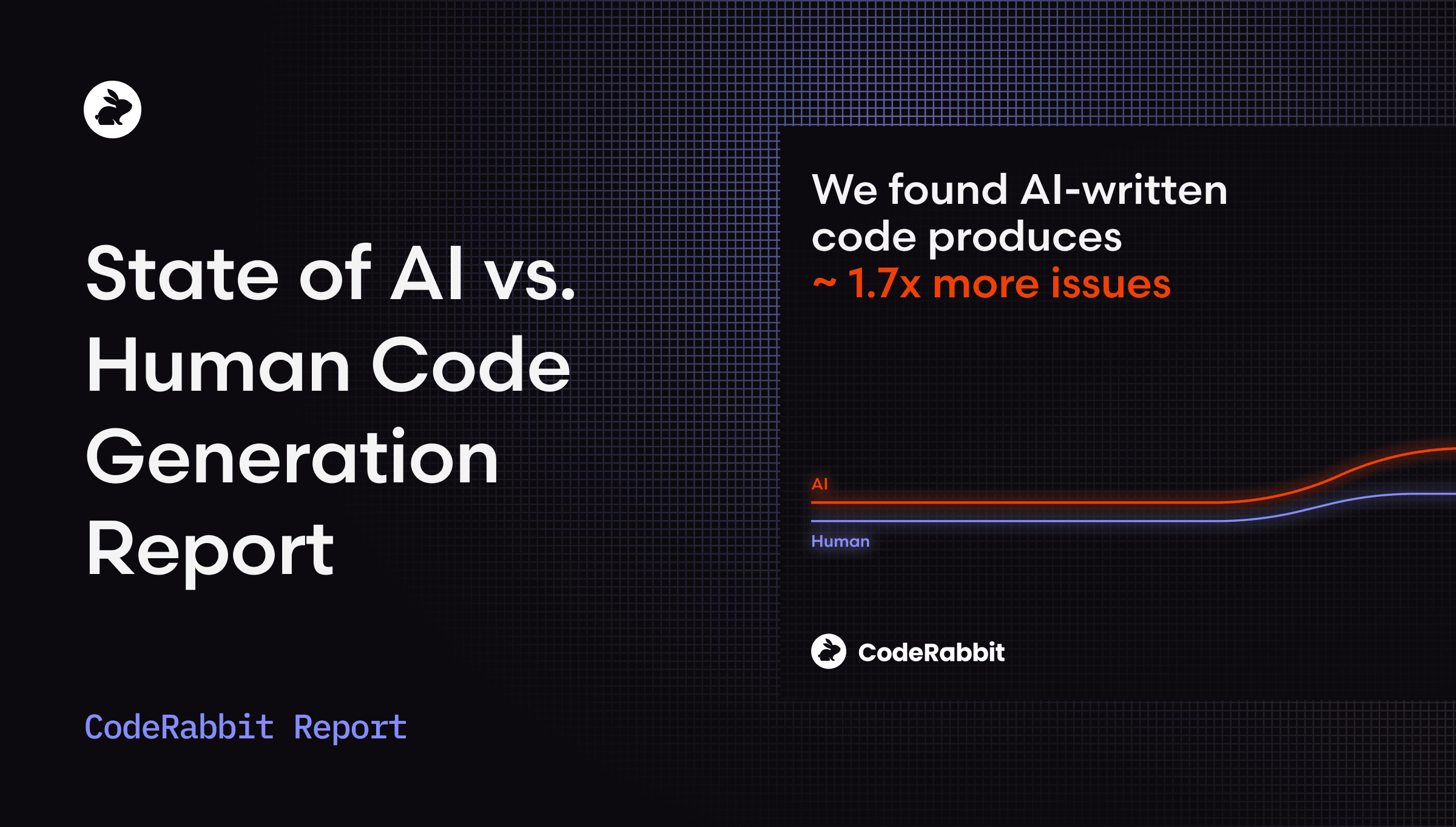
This is, without a doubt, the most critical issue. A recent report highlighted that AI-generated code introduces security issues up to 2.74 times more frequently than human-written code. Veracode's 2025 GenAI Code Security Report found that nearly half of AI-generated code samples introduce security vulnerabilities. This isn't just about theoretical risks; it's about hardcoded API keys, weak input validation, and exposed backend endpoints that leave your system wide open to breaches and financial losses.
Consider a common scenario:
# AI-generated (example of a security shortcut)
API_KEY = "sk-your-super-secret-key-12345"

def call_external_api(data):
    headers = {"Authorization": f"Bearer {API_KEY}"}
    # ... API call logic
This might work for a quick demo, but shipping this to production is an invitation for disaster. AI, left unchecked, often prioritizes functionality over secure defaults, leading to security shortcuts that are incredibly difficult to retroactively patch.
2. Inconsistent, Unmaintainable Spaghetti Code
AI tools lack an inherent understanding of architectural consistency or long-term maintainability. This leads to a codebase that's a patchwork of different styles and approaches. We routinely find:
- Duplicate Logic: The same functionality implemented slightly differently across multiple files, making updates a nightmare. A report noted concurrency and dependency correctness issues saw ~2x increases in AI code.
- Unclear Naming Conventions: Variables like
data,item, orresultproliferate, making it impossible to discern intent without deep code diving. AI introduced nearly 2x more naming inconsistencies. - Readability Issues: Formatting problems were 2.66 times more common, and readability issues spiked more than 3 times in AI contributions, making the code a slog to read and understand.
This inconsistent code slows down future development and drastically increases maintenance costs, creating what we call "verification debt" – the accumulated cost of all the checks you skipped by not understanding the code you shipped.
3. Fragile Architecture and Non-Existent Testing
AI-generated code often consists of tightly coupled components, making the system incredibly fragile. Changes in one area can unexpectedly break another, creating a house of cards that collapses under the weight of real-world usage. Furthermore, comprehensive testing is almost universally absent.
- Missing Tests: Unit, integration, and end-to-end tests are either non-existent or, worse, they "assert nothing." As one auditor put it, "The codebase compiles. The tests pass. The structure looks vaguely like something a senior developer would produce. And yet it is still broken."
- Scaling Failures: A database query that runs fine with 100 rows can grind to a halt with 50,000. Performance regressions, though small in number, skewed heavily toward AI-generated code. Without proper architectural planning and stress testing, these systems simply can't handle real user loads.
4. Missing Error Handling and Unreliable Edge Cases
AI excels at the "happy path" – the ideal flow where everything works as expected. But real applications live in a world of network outages, invalid user input, and unexpected data. Error handling and exception-path gaps were nearly 2 times more common in AI-generated code. A function might work perfectly for a populated array but crash spectacularly on an empty one.
// AI-generated (example of missing error handling)
function processUserData(users) {
    // Assumes 'users' is always an array of objects
    return users.map(user => user.name.toUpperCase());
}
// What if 'users' is null, undefined, or an empty array?
These seemingly minor oversights lead to production outages, data corruption, and a terrible user experience.
5. Hallucinated APIs and Unused Dependencies
LLMs are fantastic at generating plausible-looking code, even if it's based on APIs that don't exist or dependencies that aren't actually used. We've seen projects with multiple duplicate authentication flows or tests that refer to non-existent services. This bloat and incorrectness contribute to larger bundles, slower performance, and a confusing development environment.
Why Does This Happen?
The core of the problem lies in the fundamental nature of Large Language Models:
- Stateless Context: LLMs operate on a limited context window. They don't retain a global understanding of your entire application's architecture, security policies, or long-term vision. Each prompt is a new, isolated task.
- Completion Bias: Their goal is to complete a prompt plausibly, not to build a robust, secure, and maintainable system. They optimize for local correctness within the immediate context, often at the expense of global consistency.
- Local Optimization: They don't think like a senior engineer, who considers scalability, security implications, testing strategies, and maintainability from the outset. They don't inherently understand system design patterns or the nuances of production environments.
This means that while they're incredibly fast at generating boilerplate, they're structurally incapable of producing production-grade systems without human guidance and rigorous oversight.
How Convergex AI Finishes Vibe-Coded Apps
This isn't an argument against AI-assisted development. We use it ourselves. The issue is when an LLM drives the whole project with nobody steering. Our role as "vibe coded app finishers" is to take those promising prototypes and infuse them with the engineering rigor they need to succeed.
Here's how we transform fragile, AI-generated codebases into production-ready products:
- Comprehensive Security Audit & Remediation: We start with a thorough security audit, identifying and patching vulnerabilities like hardcoded secrets, implementing robust input validation, and establishing secure authentication and authorization flows. We strengthen security defaults and ensure compliance.
- Architectural Refactoring & Standardization: We refactor tightly coupled components, introduce clear architectural patterns (like microservices or modular monoliths), and establish consistent coding standards. We eliminate duplicate logic and enforce clear naming conventions using policy-as-code tools.
- Robust Testing Framework: We implement a full suite of tests – unit, integration, and end-to-end – ensuring every critical path is covered and asserts real functionality, not just compilation. We build correctness safety rails.
- Error Handling & Observability: We implement comprehensive error handling strategies, ensuring the application gracefully handles unexpected scenarios. We add logging, monitoring, and alerting to provide visibility into production health.
- Performance Optimization & Scalability: We identify and optimize performance bottlenecks, ensuring the application is designed to scale with your user base. This includes database indexing, caching strategies, and efficient API designs.
- Code Review & Contextualization: We provide AI with the context it needs and then rigorously review every line of generated code, ensuring it meets production standards. This human oversight is critical for catching subtle logic errors and architectural flaws.
- Documentation & Knowledge Transfer: We ensure the codebase is well-documented, making it understandable and maintainable for your team moving forward. Debugging stops being archaeology and becomes a clear, documented process.
Vibe coding is a legitimate prototyping tool. But to move from a compelling demo to a stable, secure, and scalable product, you need professional engineering expertise. Don't let your innovative idea stall at 80% completion due to hidden technical debt. Convergex AI specializes in turning those AI-generated prototypes into polished, production-ready applications, ready to launch and scale with confidence.
Sources & further reading
- https://coderabbit.ai/blog/state-of-ai-vs-human-code-generation-report
- https://altersquare.io/vibe-coded-startups-audit-common-codebase-problems/
- https://www.clixlogix.com/vibe-coding-pitfalls-7-ways-your-ai-built-app-breaks-after-launch/
- https://iurii.rogulia.fi/blog/vibe-coded-codebase-patterns
- https://frontman.sh/blog/vibe-coding-problems/
- https://dataforest.ai/blog/is-vibe-coding-bad
- https://keferboeck.com/en-gb/articles/vibe-coding-the-hidden-cost-of-ai-built-architectures
- https://onout.org/vibers/blog/vibe-coding-mistakes-production/